Nearly 400 people, predominantly from communities within the Damang Gold Mine catchment area, have entered various stages of recruitment within the first four months of operations under indigenous Ghanaian ownership.

Of the 400 candidates in the recruitment pipeline, 180 have already been employed and are working, while another 135 selected candidates are undergoing various stages of the employment process, including medical examinations and induction.
An additional 85 candidates have completed interviews and are awaiting their results.
The positions include maintenance workers, heavy-duty drivers, security personnel and general hands, among others.
The developments follow the transition of Damang Gold Mine Limited (DGML) to indigenous Ghanaian ownership on April 18, 2026.

The employment figures have been welcomed by chiefs, opinion leaders and youth representatives in the mine’s host communities, who say the early developments demonstrate the potential benefits of Ghanaian ownership of the mining asset.
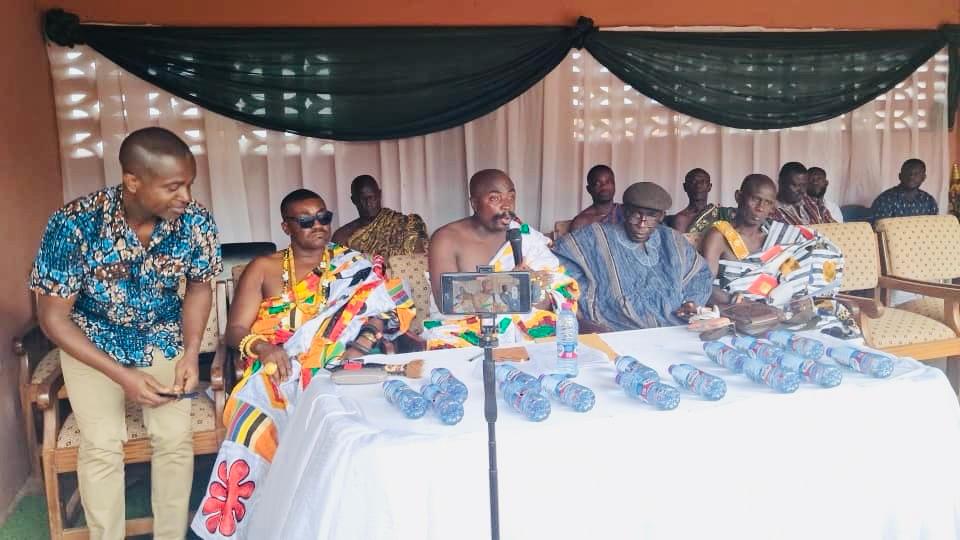
Speaking at a press conference on behalf of the chiefs, opinion leaders and youth, Chief of the Bosomtwi Divisional Council, Nana Kwabena Amponsah IV, said the communities were encouraged by the pace of recruitment and the involvement of Ghanaian professionals in key positions.
He said an agreement between DGML and the host communities provides for 60 percent of the company’s workforce to be drawn from local communities, with the remaining 40 percent sourced externally.
The chiefs, however, stressed that the benefits of employment should extend beyond the immediate recruitment numbers to include skills development, career progression and opportunities for local businesses to participate in the mine’s supply chain.
Airstrip construction begins
The communities also pointed to progress on infrastructure projects announced following the transition.
According to them, the proposed airstrip at the Huni waste dump has moved beyond planning, with the facility designed and initial earthworks already underway.

The Ghana Civil Aviation Authority and the Prestea-Huni Valley Municipal Assembly have reportedly been engaged to inspect the site and guide the project through the necessary regulatory processes.
The proposed airstrip is expected to support the operations of the mine while potentially improving connectivity and stimulating economic activity in the area.
Damang-Subri road receives attention
Work has also commenced on the Damang-Subri section of the Damang-Subri-Praso-Cape Coast road corridor.
Initial activities include clearing, cutting and filling, while culverts are being constructed in areas prone to waterlogging to improve drainage and reduce flooding.
The communities say improved roads are critical to easing transportation challenges, connecting residents to markets and public services, and supporting economic activity.
Three astroturf parks planned
DGML is also preparing to construct standard astroturf parks at Subri, Damang and Huni Valley.
The company requested land from the traditional authorities, who have made sites available for the projects.

A consultant visited the proposed locations in July, while the contractor is expected to mobilise by the middle of August.
The projects are expected to provide improved recreational facilities and support youth football development and talent identification.
Communities welcome engagement
The chiefs and community representatives have also welcomed what they describe as increased engagement with DGML through the Social Responsibility Forum and other established structures.
Chief of the Bosomtwi Divisional Council, Nana Kwabena Amponsah IV, said sustainable mining could not be achieved without strong relationships between mining companies and host communities.
He called for continued dialogue, transparency and mutual respect between DGML and the communities.
Discussions are currently focused on sustainable community relations, local employment and economic opportunities, as well as community development initiatives, including the proposed Development Foundation.
The communities have commended DGML and its leadership, including Ibrahim Mahama, for what they describe as early efforts to translate commitments into tangible interventions.
They, however, stressed that their commendation should not be interpreted as a declaration that all challenges have been resolved.
They want the commitments to be sustained throughout the life of the mine, with continued priority for qualified local workers, greater opportunities for local businesses and contractors, and the completion of infrastructure projects.
The chiefs say the ultimate test of indigenous ownership will be whether it delivers lasting benefits to workers, businesses and host communities—not only through gold production, but also through employment, skills development, infrastructure and sustainable community development.