The National Food Buffer Stock Company (NAFCO) has recorded a major financial turnaround, posting a net profit of GH¢91.7 million in 2025 after suffering a loss of GH¢19 million the previous year.
The performance, according to the State Interests and Governance Authority (SIGA), represents one of the most significant recoveries by a State-Owned Enterprise in recent years.
NAFCO’s 2025 audited accounts submitted to SIGA show that the company’s gross profit margin improved significantly from 1.61 per cent in 2024 to 13.96 per cent in 2025, reflecting stronger revenue growth and improved cost management.
The company’s Return on Operating Assets also moved from a negative 63.80 per cent in 2024 to a positive 26.29 per cent in 2025.
Beyond profitability, NAFCO contributed GH¢20.3 million in taxes to the state in 2025, marking the highest annual tax payment in the company’s 16-year history.
SIGA attributed the turnaround to governance and operational reforms implemented by the company, including the establishment of a dedicated Procurement Department, strengthening of the Internal Audit function, enhancement of the Food Safety Department, and restructuring of the Board and its sub-committees.
The Authority also credited the strong collaboration between NAFCO’s Board, management, and staff for the improved performance.
As part of efforts to sustain the gains, NAFCO’s Board has approved the organisation’s first-ever Annual General Meeting since its establishment in 2010.
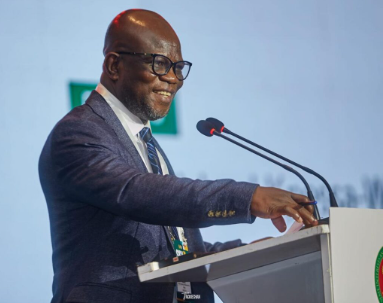
Director-General of SIGA, Prof. Michael Kpessa-Whyte, described NAFCO’s achievement as evidence of what public institutions can accomplish through effective governance and accountability.
“NAFCO’s achievement is a compelling demonstration of what Ghanaian public institutions can accomplish when governance principles are rigorously applied,” he said.
SIGA, however, stressed that NAFCO’s importance goes beyond financial performance, noting its role in Ghana’s food security system through price stabilisation, reduction of post-harvest losses, and support for smallholder farmers.
The company also contributes to government programmes, including the Free Senior High School feeding programme and national food reserve initiatives.
SIGA said it will continue working with state-owned enterprises to strengthen corporate governance, improve accountability, and ensure public investments deliver value to Ghanaians.