The Trades Union Congress (TUC) has cautioned that any extension of Ghana’s presidential term from four to five years must be accompanied by stronger governance reforms and measures to restore public confidence in democratic governance.
The union said while it had taken note of the Constitution Review Commission’s (CRC) recommendation to amend Article 66(1) to extend the presidential tenure to five years, the longer term would also mean citizens could be exposed to the consequences of poor governance for an extended period.
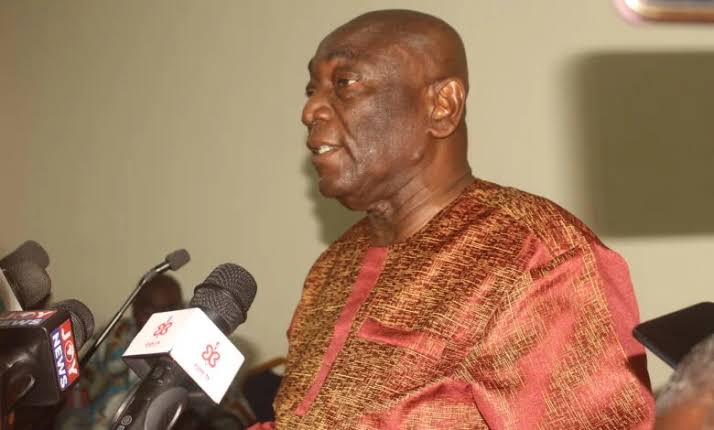
Secretary General of the TUC Joshua Ansah made the remarks at a press conference in Accra on Wednesday, September 9, 2026, where the union presented its position on the review of the 1992 Constitution, the CRC’s recommendations, and the government’s response.
“The TUC draws attention to the fact that in the event of misgovernance, a five-year tenure also means citizens will have to endure the consequences for a longer period than under the current dispensation,” Mr. Ansah said.
He said the acceptance of the five-year tenure recommendation therefore carried a corresponding obligation to improve governance and strengthen public confidence in Ghana’s democratic system.
“In other words, this recommendation is tied to other recommendations that are intended to strengthen and improve governance. One cannot, therefore, merely agree to tenure extension and leave everything else the same,” he said.
The government has accepted the CRC’s recommendation to extend the presidential term from four to five years, arguing that a longer term would provide a more realistic timeframe for the formulation, implementation, and assessment of government policies.
The TUC said the extension must consequently be considered alongside reforms aimed at improving the quality of governance and strengthening democratic institutions.
The union also expressed support for proposals to limit the President’s powers to appoint officials to key public institutions.
Mr. Ansah said the TUC agreed with the recommendation to amend Article 70 to limit presidential appointment powers, although it shared the government’s concern that the four categories of public service appointments proposed by the CRC were too vague.
“The TUC will work with the Constitution Review Implementation Committee (CRIC) as it develops a more appropriate and practical classification system for limiting the appointment powers of the President,” he said.
He argued that insulating key independent constitutional bodies from partisan presidential appointments would strengthen their independence and increase public confidence in their work.