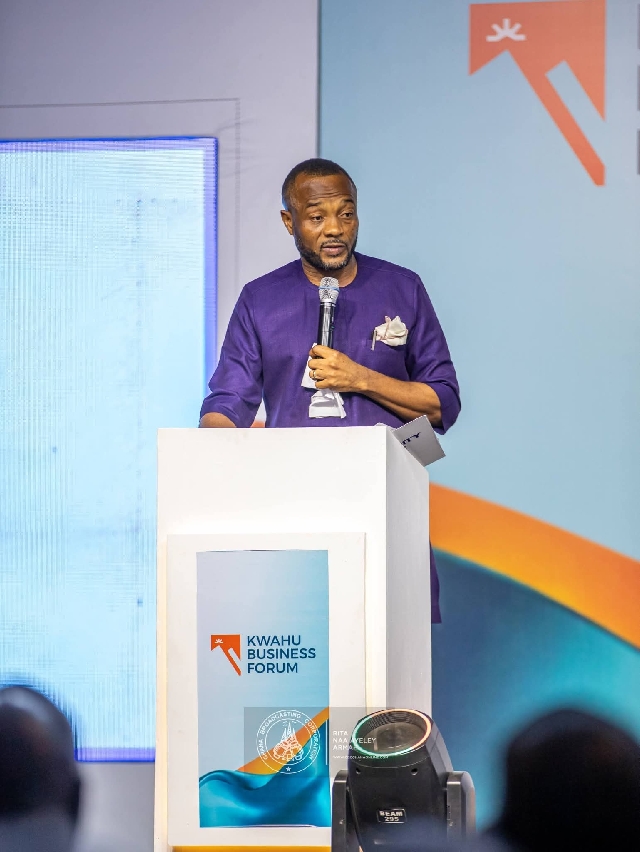
The Minority Caucus in Parliament has called for the urgent depoliticization of Ghana’s private sector, warning that partisan interference poses a serious threat to the survival and growth of indigenous businesses.
Speaking at the second edition of the Kwahu Business Forum held on April 5, 2026, Second Deputy Minority Whip, Hon. Jerry Ahmed Shaib, delivered remarks on behalf of Minority Leader Osahen Alexander Kwamena Afenyo-Markin. He stressed the need to create a business environment where success is driven by merit rather than political affiliation.
The forum, themed “Leaders Committing to Sustenance of Ghanaian Businesses,” brought together key stakeholders including industry leaders, policymakers, and development partners to address challenges facing local enterprises.
Hon. Shaib highlighted concerns raised during recent engagements with major business associations, including the Ghana Union of Traders Association (GUTA), the Association of Ghana Industries (AGI), and the Ghana Employers’ Association. He noted that many local businesses are struggling under high borrowing costs, heavy taxation, and limited government consultation in policy formulation.
According to the Minority, labeling businesses along political lines undermines innovation and creates an uneven playing field that favors foreign competitors. “The success of a business should never depend on which political regime is in power,” Shaib stated, emphasizing the need for a neutral and supportive ecosystem.
The address also pointed to challenges within the financial sector. Despite a reported lending rate of 10.70%, many small and medium enterprises (SMEs) face significantly higher effective rates due to additional fees and stringent collateral requirements. This, the Minority argues, contributes to the high failure rate of businesses within their first five years.
On taxation, the Caucus criticized what it described as overlapping tax burdens, including Import VAT, excise duties, NHIL, and the GETFund Levy. Concerns were also raised about the implementation of the AI-driven “Publican Trade Solution” at the ports, which they claim has resulted in inflated duties without adequate mechanisms for appeal.
A key issue highlighted was the lack of meaningful stakeholder engagement in policymaking. The Minority described this as a “consultation deficit,” where industry players are often engaged only after decisions have been made.
To address these challenges, the Minority outlined a legislative roadmap that includes advocating for a statutory pre-legislative consultation framework to ensure stakeholder input before major economic policies are introduced. They also pledged to push for an independent review of utility tariffs and greater parliamentary oversight of digital customs systems.
The Kwahu Business Forum, which began on April 3, continues to serve as a vital platform for dialogue between the public and private sectors. This year’s event attracted high-level government officials, including Chief of Staff Julius Debrah, underscoring the importance of aligning policy with the realities of the business environment.
The Minority concluded by encouraging entrepreneurs to remain resilient and innovative, while assuring them of continued advocacy for policies that promote fairness, stability, and sustainable economic growth.