The Bank of Ghana (BoG) has warned that refusing to accept Ghana cedi notes and coins issued by the Central Bank is a criminal offence punishable by a fine, imprisonment or both.
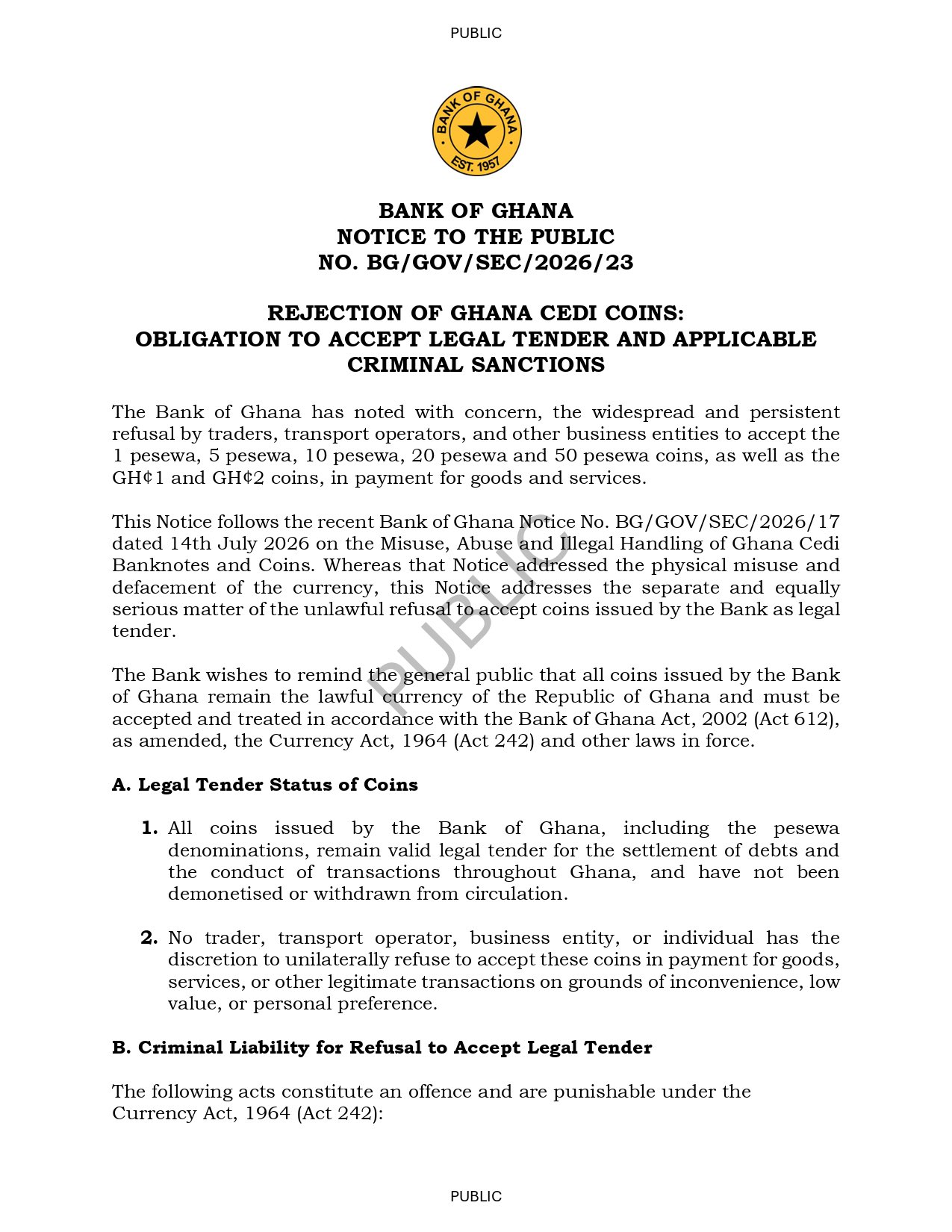
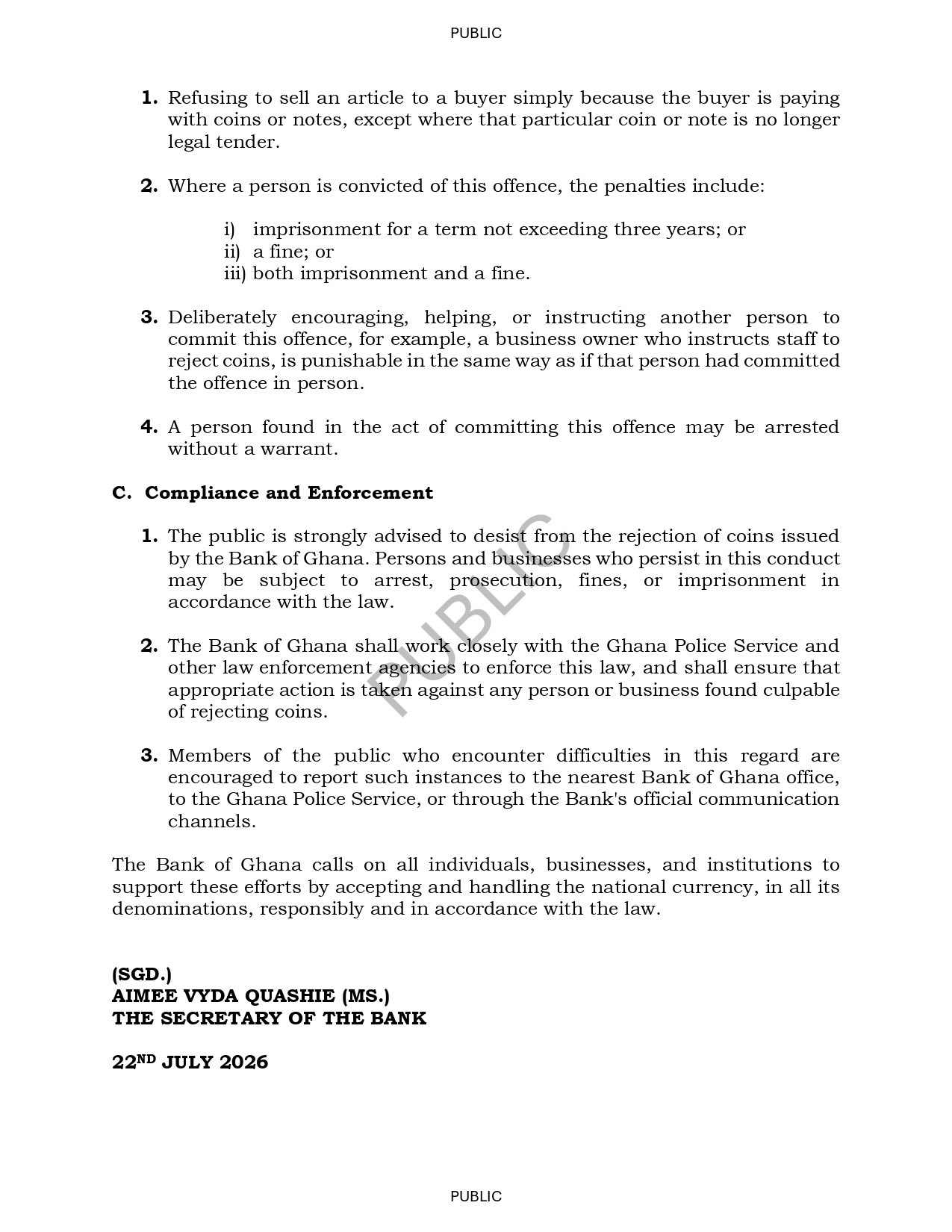
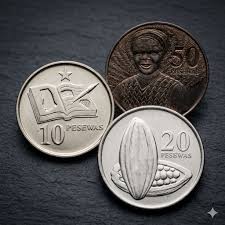
In a public notice issued on Wednesday, July 22, the BOG said it was concerned with the persistent refusal “by traders, transport operators, and other business entities to accept the 1 pesewa, 10 pesewa, 20 pesewa, and 50 pesewa coins as well as the GH¢ 1 and GH¢ 2 coins in payment for goods and services.”
According to the bank, the practice of rejecting cedi notes or coins, particularly by traders and businesses, is unlawful and punishable under the Currency Act, 1964 (Act 242).
“All coins issued by the Bank of Ghana, including the pesewa denominations, remain valid legal tender for the settlement of debts and the conduct of transactions throughout the country,” it noted.
The Central Bank warned that no trader, transport operator, business entity, or individual has the discretion to unilaterally refuse to accept these coins in payment for goods and services.
The BoG said persons convicted of refusing legal tender could face a fine, imprisonment for up to three years, or both.
It added that anyone who encourages the refusal of these coins is liable to the same penalties.
“Deliberately encouraging, helping, or instructing another person to commit this offence …is punishable in the same way as if that person had committed the offence in person,” the notice said.
To ensure compliance, the Central Bank said it would work closely with the Ghana Police Service and other law enforcement agencies to enforce the law and take appropriate action against individuals or businesses found culpable.
It encouraged members of the public who encounter such practices to report them to the nearest Bank of Ghana office, the Ghana Police Service, or through the Bank’s official communication channels.
Below is the full public notice issued by the BOG.