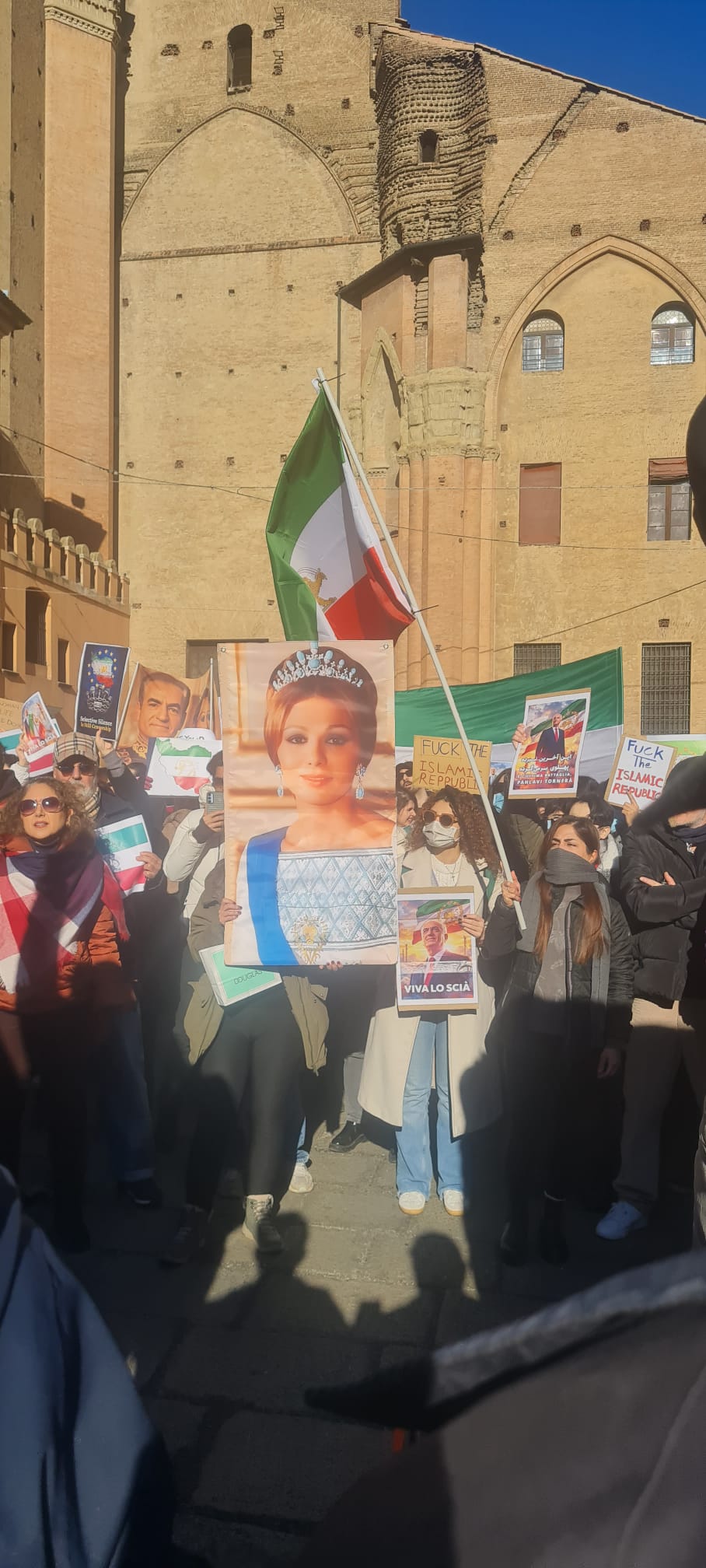
For Iranians living in Bologna, Italy, the silence at home has become a source of distress. Since Iran’s nationwide internet blackout, many diaspora members say they have been unable to contact parents, siblings, and friends back home, raising concerns that their loved ones may have been injured, detained, or worse.
Activists have accused Iranian authorities of deliberately blocking internet access in order to suppress information and keep the world from witnessing the scale of protests that have erupted in the country for more than three weeks. To support the cause at home, the diaspora community in Bologna marched to the streets yesterday to protest the Islamic Republic, which has ruled with an iron fist for four decades.
An uprising born of desperation
The current wave of unrest began in the midst of a severe economic crisis. Years of international sanctions, alleged corruption, skyrocketing inflation, and widespread unemployment have left many Iranians struggling to meet basic needs. What began as protests over the cost of living quickly escalated into something far more serious. One of the Iranian protesters, Mohammed (not his real name) claimed he had to flee Iran three years ago due to the unbearable conditions.
“One of the important reasons why people leave Iran is the government because you can’t have freedom and you are under many restrictions, and you can’t speak out your mind”.
According to him, he came out to join his fellow citizens to show the world how cruel the government is. “We are here to support our people and to show the world how cruel they are. We hope that someday Iran will be free”.
Protesters in Iran’s cities and towns began openly challenging the Islamic Republic itself, a system of governance established following the 1979 revolution that placed ultimate power in the hands of clerics under the doctrine of velayat-e faqih, or guardianship of the Islamic jurist. Chants about bread and fuel quickly evolved into calls for freedom, dignity, and political change, which turned violent.
The State strikes back
The Iranian authorities responded with force. Security personnel were deployed across the country. There have been several arrests. Live ammunition and tear gas were allegedly used against crowds. Then came the blackout, which has resulted in a nearly complete shutdown of internet and mobile data across the country. Human rights organisations claim that the communications cut-off has made it nearly impossible to independently verify events on the ground, allowing violence to escalate away from public scrutiny.
Meanwhile, Iranians living abroad do not feel safe, and the blackout feels like collective punishment.
Shirin’s (not her real name) voice was filled with despair as she described how desperate she has become because she is unable to contact her family. “My family is still there, and it’s been three days, and I haven’t heard anything from them. And all I’ve been hearing is that they’ve been killing people over there these days, so I just came here not because of who the government is, but because I want a government who doesn’t just kill people, or at least we can hear from our people.”
Protests cross borders
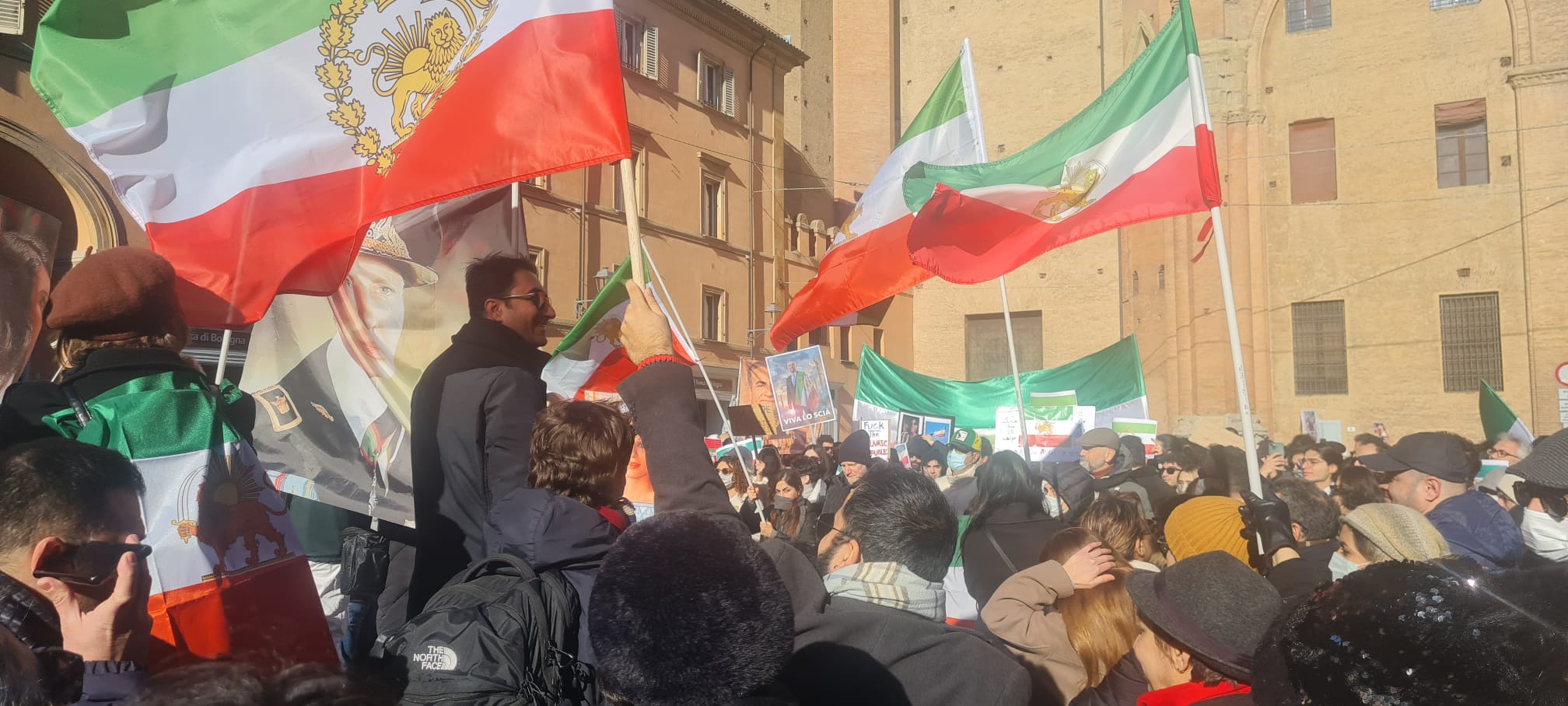
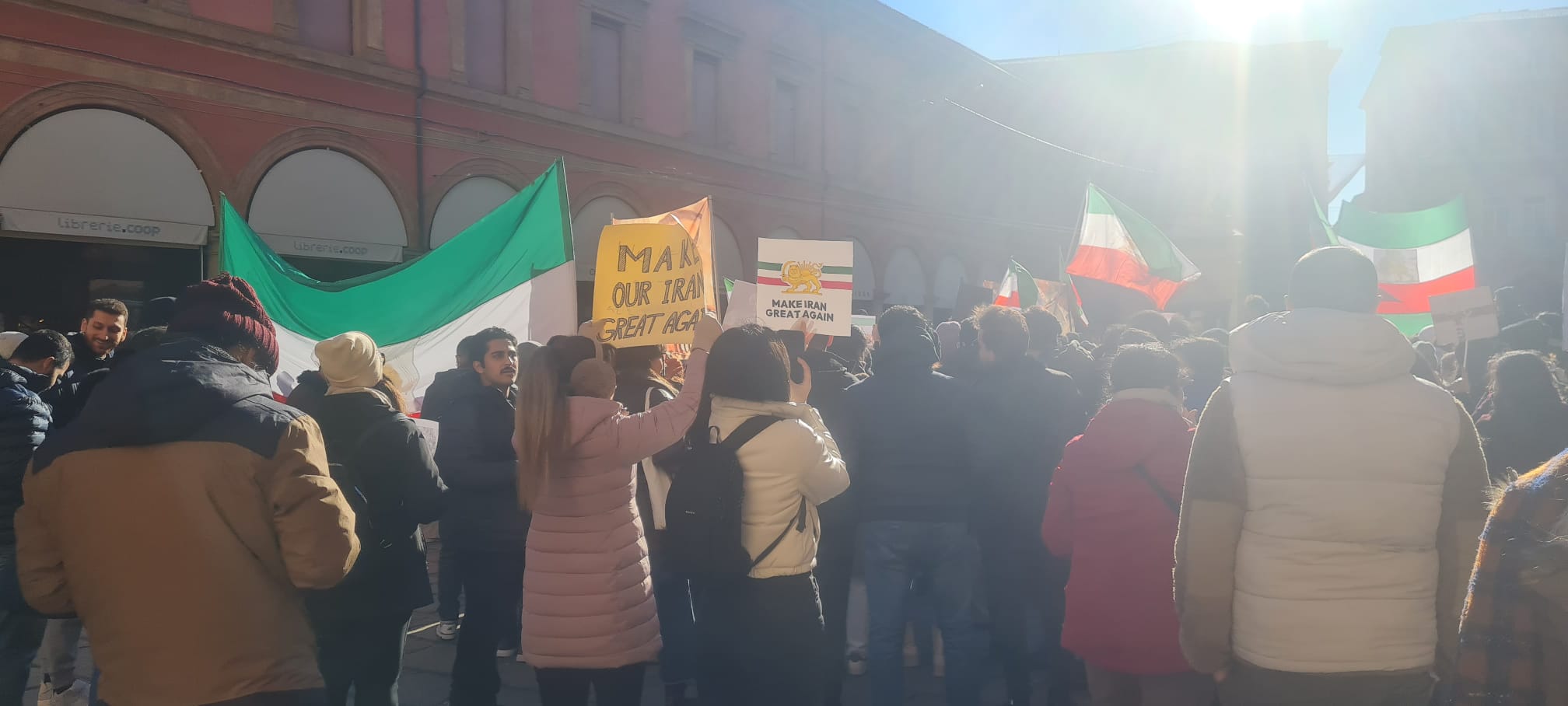
That fear trickled into the streets of Bologna, where hundreds of Iranians joined by some Italians and other human rights activists gathered in solidarity. One Italian explained his reasons for joining the protest. “What motivated me to come is the importance of democracy and the stopping of the killings of people, and I think we should, all Europeans should, demonstrate to end this tyranny in Iran”.
Another also indicated, “I came to show solidarity to the people of Iran because I saw from the news what was happening. I saw the brutal violence of the regime, and I came to show support to the expats, the young Iranians living in Italy, to help their cause for democracy and the end of the brutal regime.”
On the grounds, some carried Iranian flags and placards with inscriptions like “I stand with the people of Iran”, “If you care about human rights, speak about Iran”, The Islamic Republic must be destroyed,” among other things.
Their demands were clear: immediate internet access, an end to the violence, a change in the Islamic Republic, and accountability for Iranian authorities. But there’s also a bigger question hanging in the air: if the Islamic Republic falls, what will replace it?
Who do protesters want to take over?
Unlike previous protests, the current ones do not appear to be led by a single person or political party. Instead, they reflect a widespread rejection of clerical rule and a desire for a new political system, which protesters frequently describe as secular, democratic, and accountable.
Many demonstrators inside Iran have chanted slogans condemning both the current leadership and any form of authoritarianism, expressing dissatisfaction with decades of repression under religious rule.
Several future visions are being debated among Iranians living abroad.
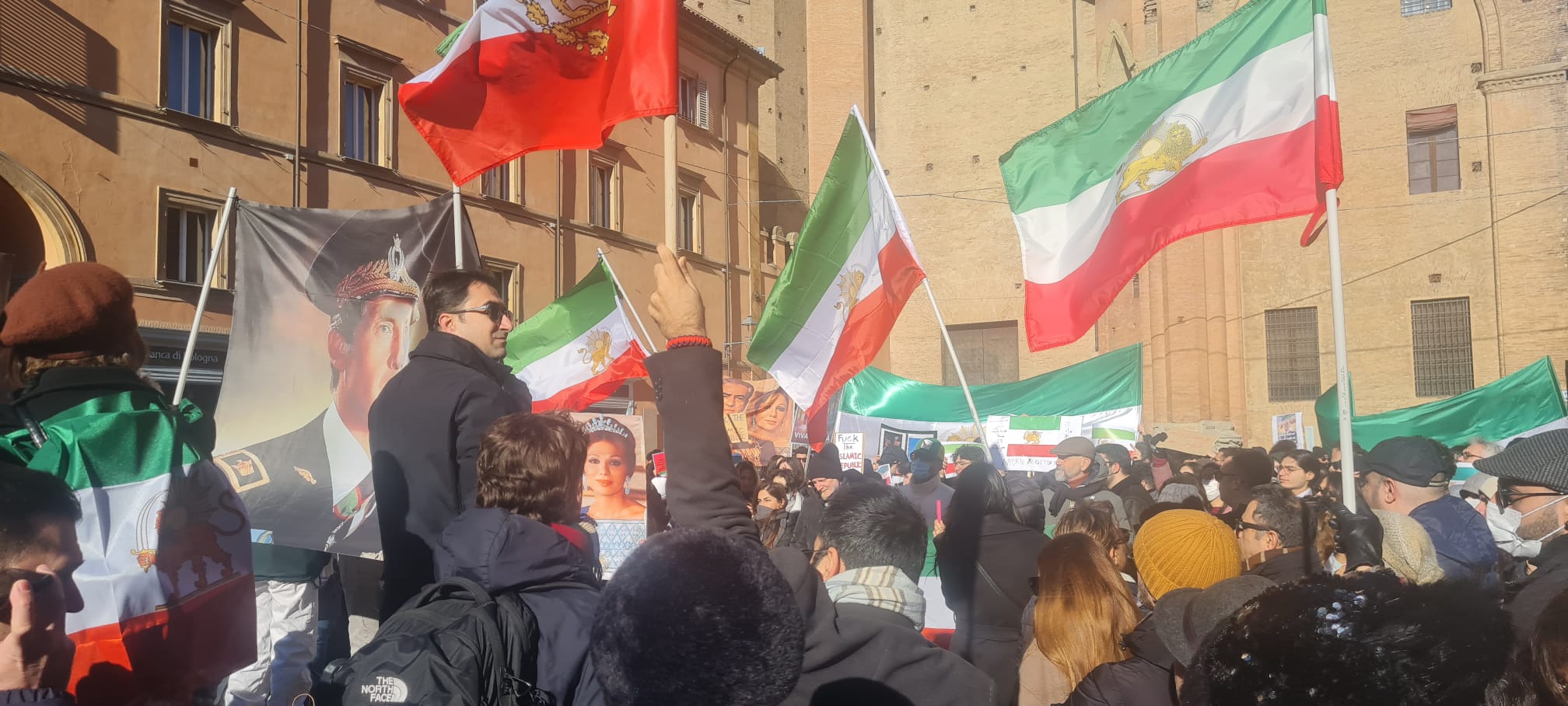
Some openly support the restoration of a constitutional monarchy, rallying around Reza Pahlavi, Iran’s last shah’s exiled son. Pahlavi has positioned himself as a unifying figure rather than a ruler, calling for a national referendum in which Iranians can freely choose their form of government. Mohammed said, “We want a democratic regime based on popular vote; this could be a good option. However, Reza Pahlavi could be an alternative during this transition period”.
Others advocate for a republican, secular democracy that has no connection to Iran’s monarchical or clerical past. This camp includes activists, academics, women’s rights organisations, and student movements who believe that grassroots participation and free elections are essential for rebuilding Iran. There are also organised opposition groups in exile, such as the People’s Mojahedin Organisation of Iran (MEK), though their role is remains controversial by many Iranians due to historical grievances and divisions.
What unites most protesters, however, is not allegiance to a single alternative leader but a shared rejection of clerical rule and the concentration of power in unelected hands. “We are just here to say that we don’t want Islamic regime and we want to change it”, Mohammed added.
A mounting death toll
International human rights organisations report that hundreds of people have been killed since the protests began, with thousands arrested in major cities such as Tehran, Mashhad, and Tabriz. Rights groups warn that the true toll may be much higher due to the information blackout. Families abroad say they are haunted by the possibility that history is repeating itself, echoing previous crackdowns in which protests were violently suppressed and accountability was never sought.
Global pressure builds
At the Bologna demonstration, Italian supporters stood shoulder to shoulder with Iranians, urging their government and the European Union to step up diplomatic pressure, impose targeted sanctions, and support international investigations into alleged abuses. “To begin with, they should demonstrate solidarity through words; declarations and statements. It will be a start for Italy, rather than saying nothing and remaining in this embarrassing silence”.
While one sympathiser supports the use of soft power diplomacy to address the issue, another advocated for hard power, which would involve arming civilians in Iran to face security forces. “I believe the European Union should impose severe sanctions on Iran, and while it is a bold statement, I believe they should assist with guns and weapons because the people of Iran are oppressed by an illegal army, and perhaps they should even arm the people of Iran to fight back against the dictatorship”.
Meanwhile, he expressed pessimism, implying that while they fully support the demonstration, it may have no effect on what is happening. “Unfortunately, I don’t think it will get much impact in Iran because they really don’t care as a country, so it’s very important to do this demonstration, but it will not be so effective, I think”.
For protesters, silence from the international community is almost as painful as silence at home.
A Nation, waiting to be heard
As Iran remains largely isolated from the rest of the world, millions of people are waiting both inside and outside its borders. They are waiting for a signal, message, or confirmation that their voices have been heard. What comes next is uncertain. But Iranians in Italy and around the world understand that this movement is about more than just protesting; it is about reclaiming a long-denied future. A future in which equality is unavoidable, where women can climb the career ladder alongside men without being rejected because of their gender.
Shirin explained how she was denied a managerial position because she is a woman. “I left Iran because I couldn’t organise my life there. Because, as a woman, you are not required to do as many things. I studied management engineering and went to meet with some CEOs, who told me I couldn’t work as a manager because I was a woman”. Women, like Shirin, have been treated as second-class citizens, deemed unfit for “men’s roles.”
At this point, until the internet is restored and other demands are met, fear will reign supreme, and the worst-case scenario cannot be excluded.
Story by: Asabea Akonor, Bologna, Italy