The Minority Caucus in Parliament has launched a fierce campaign against Sections 207 and 208 of the Criminal and Other Offences Act, 1960, accusing the government of resurrecting criminal libel through the backdoor and using the provisions to muzzle critics.
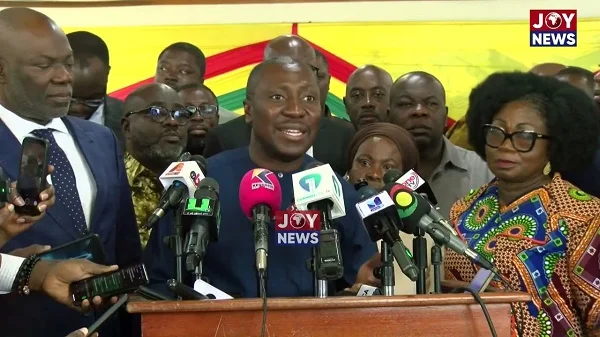
At a press conference on Friday, July 17, 2026, Minority Leader Alexander Afenyo-Markin declared that the recent conviction and one-year imprisonment of TikToker Camila Alhassan for posting videos alleging President John Dramani Mahama engaged in ritual sacrifices should serve as a wake-up call to all Ghanaians.
“We say plainly: this should trouble every Ghanaian, whatever their party colours,” he stated, describing the custodial sentence as a warning shot at every citizen who owns a smartphone.
The Minority argued that while Ghana made history in 2001 by becoming the first African country to abolish criminal libel laws under the Kufuor administration, Sections 207 and 208 have quietly taken their place, criminalising offensive conduct and publication of false news with prison terms of up to three years.
“Twenty-five years after 2001, it is time to finish the job,” Afenyo-Markin declared, pointing to a troubling pattern of arrests including Kwame Baffoe, known as Abronye DC, who was remanded and granted GH¢100,000 bail; Alhassan Abdul Rahaman arrested over a Facebook post; Alfred Ababio Kumi seized in a pre-dawn raid; David Essandoh picked up by masked operatives over a “dumsor” post; and Counselor George Lutterodt now facing charges.
The Minority leader accused the government of selective enforcement, noting that while critics are being jailed, government-aligned commentators face no such consequences.
“Let us not be delicate about this, because delicacy will not serve the truth. The label has changed. The purpose, and the effect on the citizen sitting in a cell today, has not,” he said.
The caucus made a direct appeal to President John Dramani Mahama, reminding him of his background as a journalist and a member of the Ghana Journalists Association, arguing that a President with such a history should be the last person to preside over the criminalisation of speech.
“A President who understands, from his own career, what it is to search for the right word against a deadline ought to be the last person in this Republic to preside over the criminal prosecution of a citizen for an insult,” Afenyo-Markin stated.
The Minority outlined four demands: withdrawal of all pending prosecutions under Sections 207 and 208; discharge of anyone currently serving sentences under the provisions; passage of legislation repealing both sections; and a public commitment that no citizen will face criminal charges for critical speech.
The Minority pointed to international progress, noting that the United Kingdom removed “insulting” from its public order law in 2014, Kenya’s Court of Appeal struck down false-publication offences in March 2026, and Zambia’s High Court invalidated similar provisions in 2014.
“Ghana was once the leader on this question in Africa. We should not now be the country still holding on to a law that London, Nairobi and Lusaka have each moved beyond,” Afenyo-Markin said.
The Minority leader claimed his caucus has already laid a private member’s bill before Parliament seeking repeal and has called on the Majority to support it, insisting the matter transcends party politics.