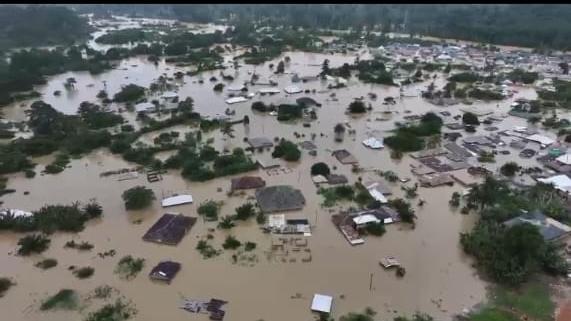
A humanitarian crisis is unfolding in Samreboi in the Western Region after days of torrential rains triggered severe flooding, leaving two people dead, more than 1,200 residents displaced, and widespread destruction. Authorities say the disaster has been worsened by the devastating impact of illegal mining on the Tano River.
The people of Samreboi in the Amenfi West Municipality of the Western Region are counting the cost of devastating floods that have left a trail of destruction across several communities.
What began as a heavy downpour on Monday, June 15, quickly escalated into one of the municipality’s worst flooding disasters in recent years. The Samre and Tano rivers, once the lifeblood of the area, burst their banks, inundating homes and farmlands and forcing thousands to flee for safety.
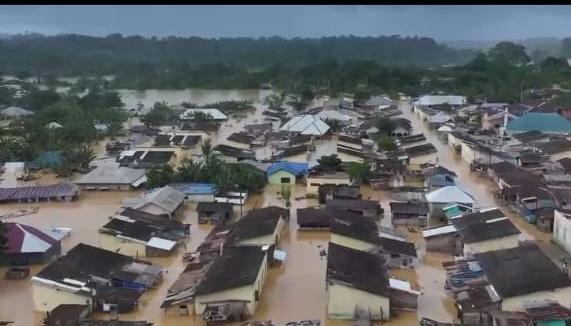
More than 200 houses in Aboi, Cocoase, Popolozzo, and Nsuo Akyir Roman Hill have been submerged, while 26 buildings have completely collapsed. Families escaped with only the belongings they could carry, wading through waist-deep floodwaters with children on their backs.
The disaster has claimed two lives—a 17-year-old and a one-year, two-month-old child—deepening the grief of the affected communities.
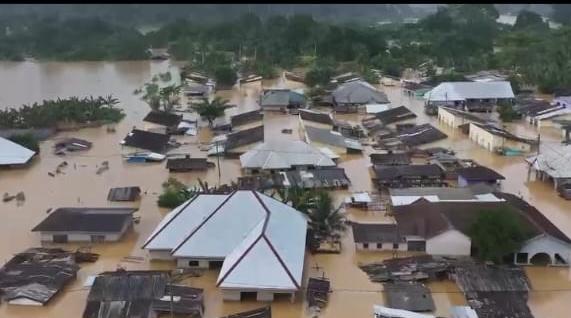
Residents say the scale of the destruction is not solely the result of heavy rainfall. They point to illegal mining, popularly known as galamsey, as the biggest contributor to the disaster. Years of mining activities have stripped riverbanks of vegetation, heavily silted the Samre and Tano rivers, narrowed their channels, and significantly reduced their capacity to contain floodwaters.
During a visit to assess the situation, Western Regional Minister Joseph Nelson also attributed the flooding to the environmental destruction caused by illegal mining along the Tano River.
The Western Regional Director of the National Disaster Management Organisation (NADMO), Daniel Darlington Attitoe, disclosed that 1,252 people have so far been affected, with 26 houses completely destroyed.
To provide immediate relief, schools and churches have been converted into temporary shelters for displaced residents as authorities continue to assess the extent of the damage.
As the floodwaters gradually recede, the tragedy has once again reignited concerns over the devastating consequences of illegal mining