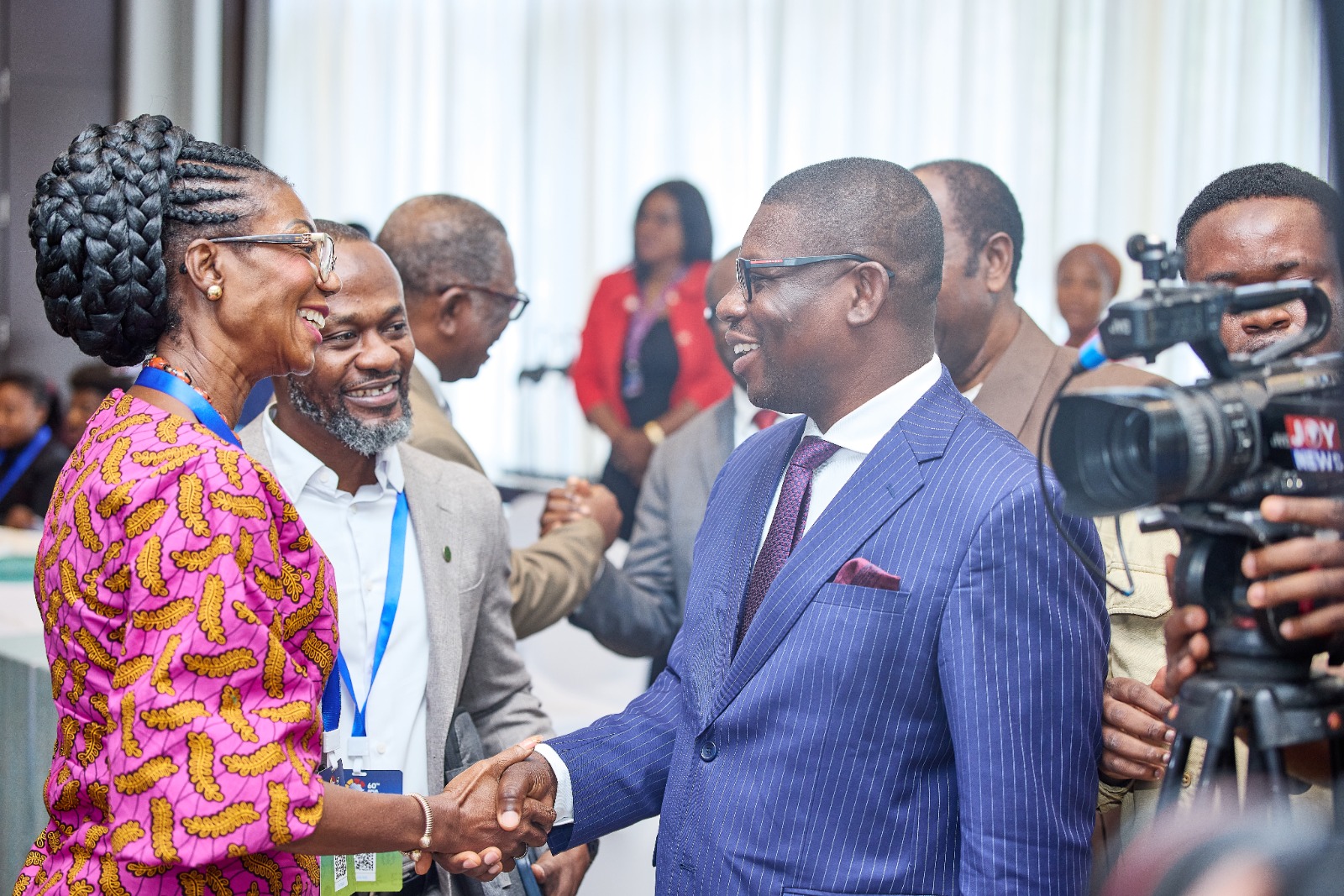
The Deputy Minister of Energy and Green Transition, Richard Gyan-Mensah has backed calls for Ghana and Africa to invest in nuclear energy. He made this known at the Opening Ceremony of the 60th Annual General Meetings of the Association of Power Utilities of Africa (APUA) at Movenpick Ambassador Hotel in Accra.
The weeklong event which is hosted by the Volta River Authority (VRA) in partnership with other public utilities (ECG, BPA, GridCo) brought together leaders of Africa’s power sector and industry experts across the world under the theme “Accelerating Africa’s Electricity Market Integration: Advancing Regulatory Readiness, Regional Market Development and Strategic Partnerships”.
“I add my voice to that of my brother and Chief Executive of VRA Mr Obeng-Kenzo and I look forward to VRA venturing into nuclear energy production to explore the opportunities and advantages which includes clean air protection, high reliability and improved density” Mr Gyan Mensah said.
Mr. Gyan-Mensah indicated that the energy sector across the African continent thrives on strong financial modules, technical structures and cooperation amongst partners who play critical roles in the sector to secure energy sustainability and reliability.
He revealed that the Mahama administration in the last 18 months since assuming office has settled the over $1.4 billion legacy debts in Ghana’s energy sector, restored the $500 million World Bank guarantee for the Sankofa Project and strengthened the Cash Waterfall Mechanism. These interventions Mr Gyan Mensah explained have been critical to avert erratic power supply and improve reliability of electricity for domestic and industrial customers.
He further indicated that Ghana currently has over 5,000 MW of installed capacity with a dependable capacity of more than 4,700 MW while solar production has also witnessed some increments and called on ECG and NEDCo to continue to improve access and grid stability.
He also emphasized the need for digitalization and advance technology in power production to reduce cost, improve reliability and sustainability, noting that “Ghana is ready to share experience, technical knowledge and finance modules that have guaranteed its power sector sustainability and also learn from sister countries”.