President John Dramani Mahama has outlined a series of investments in military aviation, naval security, and land operations following the handover of three newly acquired aircraft to the Ghana Air Force.
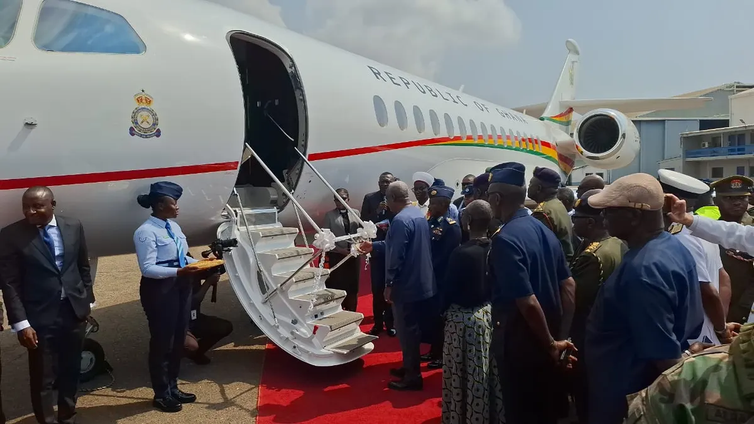
The handover, which took place at the Air Force Base in Accra on Thursday, November 26, saw the addition of two Airbus helicopters and a Falcon 6X long-range presidential jet to the country’s aviation fleet.
The helicopters are an Airbus Corporate Helicopter ACH175, which accommodates nine persons, including crew, and an ACH160, with capacity for 12 persons, including crew. The Falcon 6X has a seating capacity of 17, including crew.
Addressing military personnel at the ceremony, President Mahama disclosed that the government intends to acquire two more Airbus H175 helicopters in 2027, alongside plans to restore several grounded aircraft to service.
The rehabilitation programme will cover MI-17 helicopters, CASA-295 transport aircraft, and K-8 fighter jets, which have experienced operational and maintenance challenges. The intervention is expected to increase the number of aircraft available for military assignments.
The President also announced plans to expand the country’s maritime and ground security capabilities through the procurement of two additional offshore patrol vessels for the Ghana Navy and new vehicles for the Ghana Army in 2027.
The naval vessels are expected to support the protection of Ghana’s maritime territory, while the vehicles will improve the Army’s capacity to move troops and equipment during operations.
President Mahama said the three newly acquired aircraft were purchased directly from their manufacturers, with the approach intended to guarantee quality, reliability, and value for money.
He underscored the importance of equipping the Armed Forces to respond to evolving security threats and fulfill their constitutional mandate of protecting the country’s territorial integrity.
The President further reminded the Ghana Air Force that the aircraft belonged to the Republic of Ghana and charged the service to ensure their proper maintenance, safe operation and efficient deployment in the national interest.