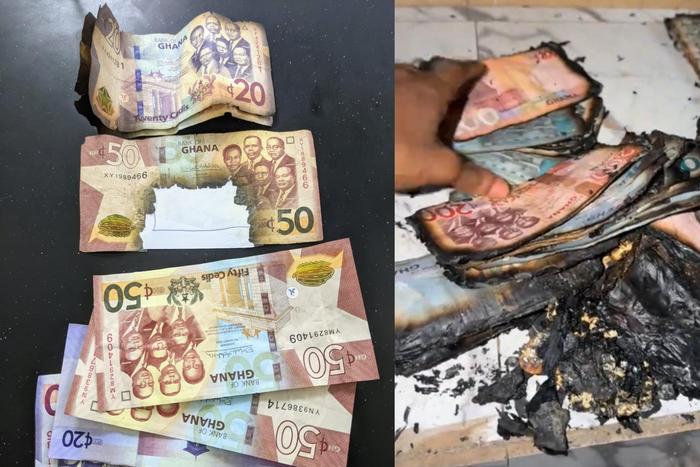
The Bank of Ghana (BoG) has cautioned individuals against turning the repair of torn and soiled cedi banknotes into a business, warning that the practice could compromise the integrity of the country’s currency and expose the public to financial losses.
The warning follows the circulation of a video on social media showing individuals using adhesive tape to rejoin damaged banknotes for re-issuance.
In a statement issued on October 7, 2026, the central bank said banknotes that have been taped, glued, stapled or otherwise improperly repaired are not fit for circulation.
It explained that such notes could affect their acceptability within the cash system and damage automated teller machines (ATMs) and other currency-processing equipment.
The BoG also warned that improperly repaired notes could be rejected when presented for payment or exchange, leaving holders at risk of losing money.
“The Ghana Cedi banknote is legal tender and an important national symbol. No person should engage in the repair, re-joining or other alteration of mutilated banknotes for re-issuance or recirculation,” the statement said.
The central bank reminded the public that it has the sole mandate for managing Ghana’s currency and urged people not to attempt to restore damaged notes for circulation.
Instead, holders of torn or mutilated banknotes should submit them to commercial banks for examination and replacement under the BoG’s laid-down procedures. More than half of the original banknote must be presented for examination.
The bank further encouraged the public to report individuals involved in the improper repair, rejoining or mutilation of cedi notes to the central bank or the appropriate law enforcement authorities.
The advisory is part of efforts to safeguard the Ghana cedi and ensure damaged banknotes are handled through approved channels.