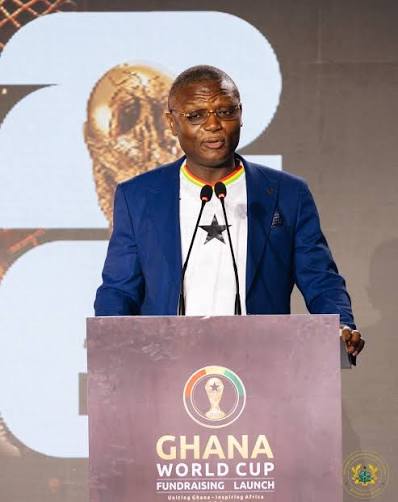
The Ministry of Sports and Recreation has disclosed that it spent approximately US$1.26 million to secure 2,922 tickets for Ghana’s three group-stage matches at the 2026 FIFA World Cup.
Sports and Recreation Minister Kofi Adams made the disclosure when he appeared before Parliament’s Youth and Sports Committee on Thursday, September 17.
The tickets cover Ghana’s group-stage fixtures against Panama, England, and Croatia, with 948 tickets secured for the opening game against Panama, 1,000 for the England fixture, and 974 for the match against Croatia.
Mr. Adams explained that the tickets were procured for distribution to supporters and Ghanaians rather than for commercial sale.
He said the total expenditure included a 10% administrative fee charged by FIFA on the face value of the tickets.
For the Panama fixture, the ministry secured 100 Category One tickets at a FIFA-listed price of $450 each. With the administrative charge included, each ticket cost $495.
A similar arrangement applied to the England and Croatia matches. The ministry purchased 100 Category One tickets for the England game at a face value of $600 each, bringing the cost per ticket to $660 after the additional charge.
For the Croatia fixture, 100 Category One tickets were purchased at a face value of $500 each, with the final price rising to $550 per ticket after the 10% charge.
The remaining tickets across the three matches comprised various supporter categories, including premium, standard, value, and entry tickets, each carrying different prices.
According to the Minister, the tickets were allocated to several groups, including members of the Ghana Supporters Union, Ghana’s diplomatic missions in Canada and the United States, Ghanaians living in the diaspora, the Ghana Students Association, the official government delegation, and selected Ghana Football Association officials.
Mr. Adams said the Ministry initially planned to make more than 800 tickets available to supporters, with the remainder intended for other Ghanaians.
However, visa application challenges at some centres affected the original distribution plan.
As a result, the Ministry decided to increase the number of tickets allocated to Ghanaians who are already residents in the diaspora and therefore would not face the same visa-related constraints.