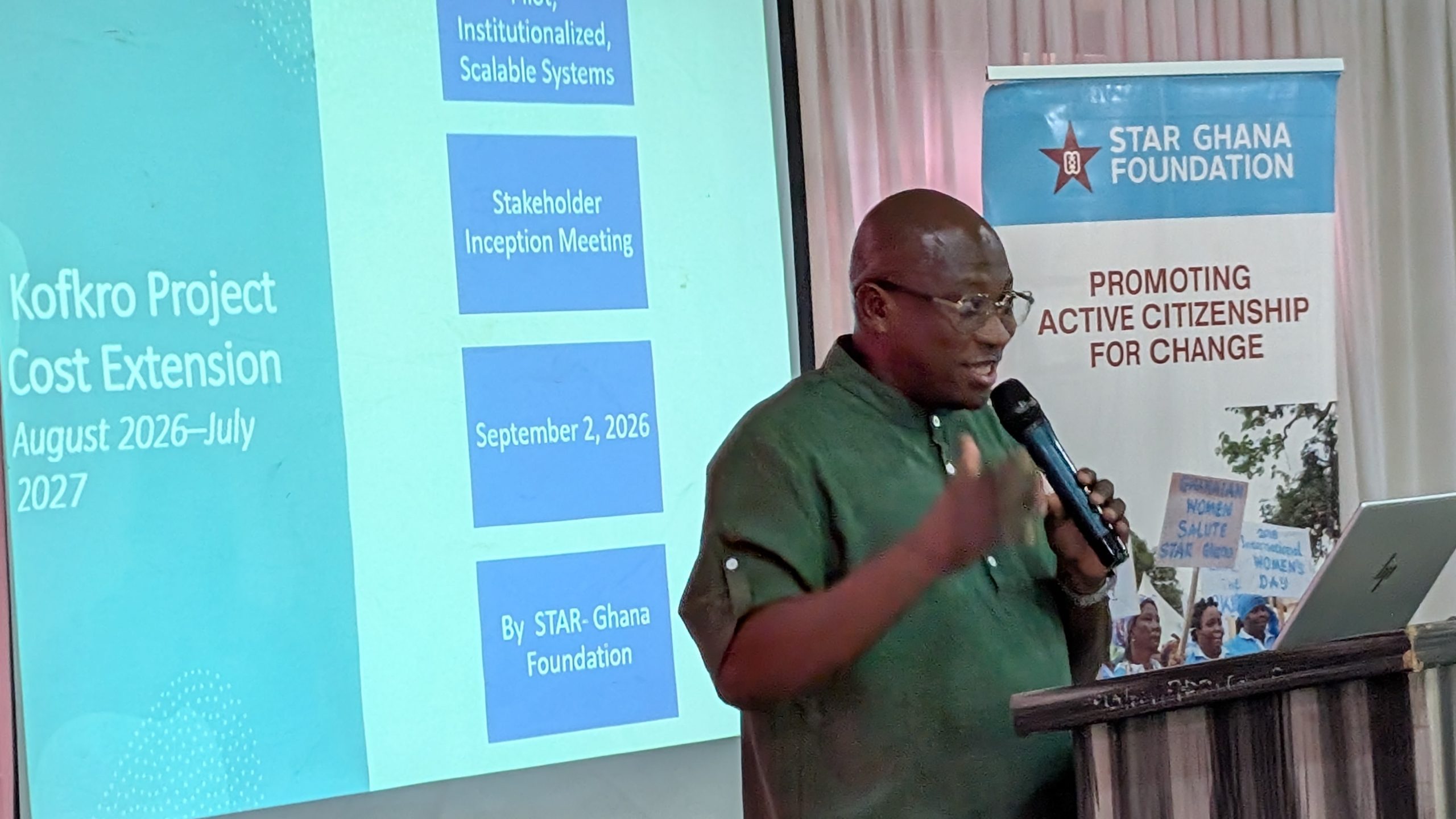
STAR-Ghana Foundation, with support from the Botnar Foundation, has convened key partners and stakeholders in the New Juaben South Municipality for the inception meeting of the KofKro II Cost-Extension Phase, a one-year bridge period running to July 2027 that will consolidate the gains of the project’s first phase while laying the groundwork for a redesigned, more sustainable next chapter of youth-led development.
Building on Three Years of Progress
The KofKro Project was launched over three years ago with a clear vision: a municipality where young people do not simply wait for government and other duty-bearers to make decisions about their development, but actively participate in identifying, advocating for and contributing to the priorities that shape their lives and communities.
Opening the inception meeting, Joan Vivian Koomson, Head of Partnerships and Resource Mobilisation at STAR-Ghana Foundation, reflected on a first phase that met and in some areas exceeded its original expectations, with the project’s donor expressing satisfaction with the outcomes achieved.
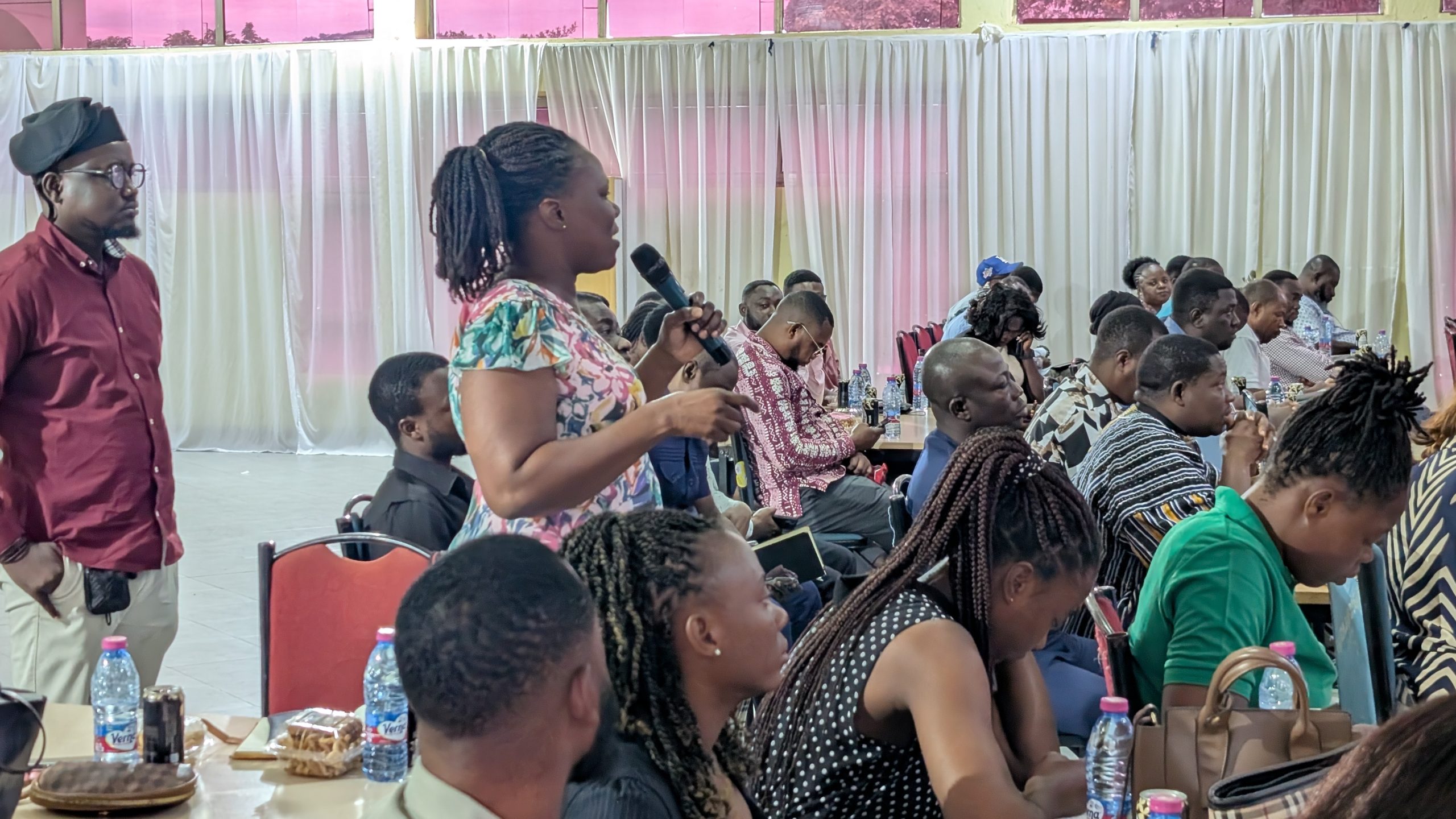
Implemented with partners across the New Juaben South Municipality, the project collectively reached about 28,000 young people through interventions spanning economic empowerment and youth engagement. Among the milestones achieved:
- Fruitful partnerships were built with the Municipal Assembly and other stakeholders.
- Youth priorities were embedded in the Municipality’s 2026–2029 Medium-Term Development Framework.
- Resources were allocated to support youth activities within the municipality.
- The KofKro Youth Manifesto was developed and adopted by the Municipal Assembly as a reference point for planning around youth priorities.
- The Youth Parliament was strengthened, deepening youth participation in municipal discussions and activities.
- Youth representation on the Municipal Assembly grew from three representatives at the start of the project to eleven.
- A working relationship was established with the National Youth Authority, which selected the municipality for some of its activities.
The results generated interest in extending the KofKro approach to another municipality or region.
Partners who implemented Phase One echoed this progress. BBF Association, pointed to support that helped project drivers in New Juaben South obtain valid driving licences, improving road safety and economic security.
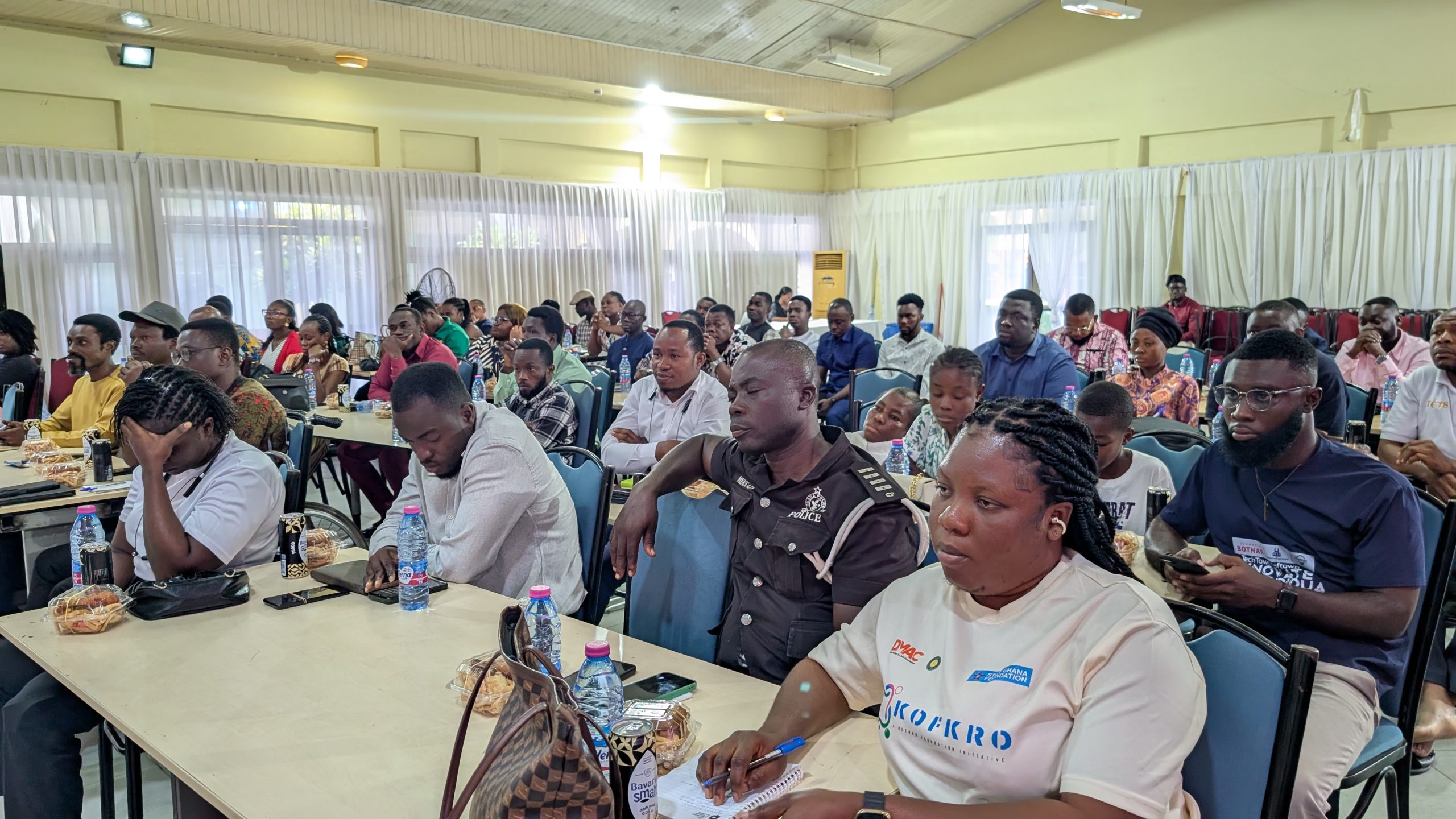
Again, through advocacy, they helped secure sanitation-related support in the Assembly’s budget, and the mobilisation of over 5,000 young people at the commercial station for engagement activities. DMAC, represented by its Executive Director, credited Phase One with creating space to engage stakeholders and amplify young people’s voices, while thanking the Municipal Assembly, the National Youth Authority, the Ghana Enterprises Agency, the Youth Employment Agency, schools and the Ghana Police Service for their support.
Communication and Media Officer for AFES Ghana, Michael Ensti noted that capacity building, stakeholder engagement and public dialogues had strengthened young people’s ability to articulate their priorities to duty-bearers, with the Youth Manifesto serving as a key mechanism for consolidating those priorities.
A representative of the Youth Parliament also acknowledged the platform’s role in mobilising young people and deepening their participation in governance and accountability processes, calling for continued support to broaden that reach.
Why a Bridge Phase
The KofKro Project was originally envisioned as a five-year intervention. But shifts in the global development financing environment have prompted donors and implementers alike to rethink how development interventions are designed and delivered. While the donor remains committed to the project, the next phase requires redesign and to avoid a gap that could stall momentum in the communities, a one-year bridge grant to July 2027 has been provided.
This bridge phase serves two purposes: completing outstanding activities from Phase One, and creating space to reflect, innovate and plan with sustainability at the centre, for what comes next.

Four Priorities for the Cost-Extension Phase
Presenting the rationale and design of the cost-extension phase, Raymond Danso, Portfolio Manager for Rights to Services at STAR-Ghana Foundation, outlined four intervention areas that will guide implementation through July 2027:
Labour Market Intelligence. A Labour Market Information/Intelligence System is being developed collaboratively by STAR-Ghana Foundation, young people, the Municipal Assembly and the private sector to close the gap between youth skills and available job opportunities. Young people will take part in data collection, piloting and testing, while private-sector actors will supply information on available opportunities. The platform is expected to launch for testing by December 2026.
Mental Health and Youth Well-being. Building on Phase One reflections, the project will work to institutionalise mental health interventions at the basic and secondary school levels covering awareness creation, education, resilience-building and access to support in collaboration with the Ghana Health Service and Ghana Education Service.
Local Governance and Youth Participation. The project will strengthen youth engagement in governance through town hall meetings, dialogues and a proposed municipal youth desk, developed with the Municipal Assembly, young people and the National Youth Authority, complete with standard operating procedures to guide its work. An annual Youth Summit is also envisioned as a platform to review priorities, track progress and strengthen coordination at municipal, regional and national levels.
Evidence Generation and Learning. A Youth Well-being Index will be developed to build an evidence base on the challenges and opportunities facing young people in New Juaben South, including access to health and education services and the state of youth mental health. This evidence, along with learning products on youth-private sector relationships and the integration of youth evidence into municipal plans and budgets, will inform both this phase and consideration of replicating the KofKro model elsewhere.
A Shared Undertaking
Realising these priorities, the meeting was told, will depend on the active participation of a wide ecosystem: the Municipal Assembly, young people, the National Youth Authority, the Ghana Education Service, the Ghana Health Service, private-sector actors, civil society, academia and traditional authorities. The Municipal Assembly is expected to provide administrative backing and integrate youth priorities into planning and budgeting; young people will drive co-creation, testing and mobilisation; the National Youth Authority will offer technical support aligned with the National Youth Policy; and private-sector actors will help power the new labour market platform with real opportunities.
Through this next phase, STAR-Ghana Foundation, with the backing of the Botnar Foundation, is working to move the KofKro model from a time-bound project into a lasting, sustainable approach to inclusive, youth-led municipal governance in New Juaben South, one where young people are not just heard, but positioned to shape the decisions that affect their futures.