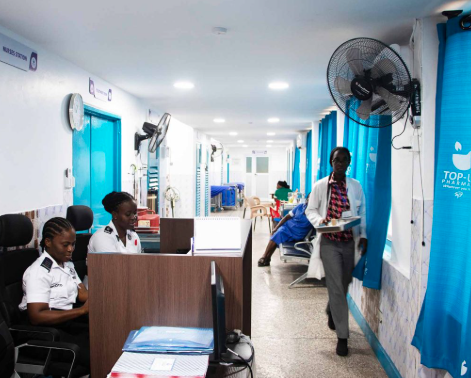
The Manager of St. Joseph Catholic Hospital in the Eastern Region, Mr. Philemon Kofi Quansah, has disclosed that the increasing use of Artificial Intelligence (AI) by patients is creating new challenges for healthcare professionals.
According to him, patients and their relatives are increasingly recording or taking note of medical terms and explanations as well medications given by healthcare providers and submitting them to AI platforms to interpret the information and recommend possible courses of action.
He said the development has changed the traditional relationship between healthcare professionals and patients, requiring doctors, midwives and other health workers to communicate more clearly and transparently.
“In those days where doctors or healthcare providers used big, big words and a lot of jargons that mothers and fathers did not understand, it is not the same these days,” Mr. Quansah said.
He explained that patients can now listen to medical explanations, record them, and use AI to interpret what health professionals have said.
“This day, as their relative or the patient is listening to you, either he or she is recording or something else, they will listen to those words, send it to AI, AI will interpret to them, and then also give them which action to take,” he noted.
Mr. Quansah said the trend, coupled with increased public awareness of maternal health issues, has made healthcare delivery particularly challenging for professionals working in maternity and obstetrics.
He disclosed that the hospital had received about four different reports from its maternity unit within two months, arising from concerns over comments made by midwives or what relatives perceived as mistakes in the delivery of care.
“People are now observant. Apart from the AI, people are really, really opening their eyes,” he said.
The hospital manager therefore urged healthcare professionals, particularly midwives, to combine technical competence with compassion when dealing with patients and their relatives.
He made the call at an event marking the 10th anniversary of the maternity unit of St. Joseph Catholic Hospital, where he described midwifery as a profession that requires compassion because midwives play a critical role in bringing new life into the world.
He urged midwives to reflect on their work and make compassion an integral part of their service.
Mr. Quansah said the maternity unit had recorded more than 4,000 deliveries over the past decade, describing the achievement as significant, particularly because the hospital is widely known for its orthopaedic services.
He challenged the maternity unit to double the number of deliveries over the next five years while prioritising quality care and reducing maternal and neonatal deaths to the barest minimum.
He further expressed concern that the growing pressure surrounding maternal deaths could discourage young medical professionals from pursuing careers in midwifery and obstetrics and gynaecology.
According to him, some doctors who would previously have considered specialising in obstetrics and gynaecology are now opting for other areas of medicine because of the challenges associated with maternal healthcare.
He nevertheless encouraged young people interested in the profession to pursue it wholeheartedly and contribute to efforts to improve maternal and newborn health in Ghana.
Giving an account of the Maternity Ward’s 10-year performance, the Head of the Maternity Unit, Madam Abigail Serwaa Adjei, disclosed that the hospital recorded 4,856 deliveries involving 4,982 babies over the period.
She said the hospital recorded seven maternal deaths during the decade, while 56 stillbirths were recorded.
Madam Adjei explained that some of the stillbirths involved mothers who arrived at the hospital after their babies had already died, while in other cases, efforts by healthcare professionals to save critically ill babies were unsuccessful.
She said despite the achievements recorded over the past decade, the Maternity Ward continues to face serious infrastructural challenges.
According to her, the ward currently has only 15 beds, with most of the beds being outdated and difficult to move.
She therefore appealed to the government, philanthropists and the general public to support St. Joseph Catholic Hospital with modern beds and other essential equipment to improve maternal and neonatal healthcare delivery.
By Kojo Ansah