The Minister of State for Climate Change and Sustainability, Seidu Issifu, says the government is taking steps to deepen climate action at the local level by establishing dedicated Climate Change Units (CCUs) in all Metropolitan, Municipal and District Assemblies (MMDAs).
Speaking at the Sub-National Stakeholder Engagement on Climate Change and Sustainability in Wa, the Minister said the effects of climate change are felt most directly in communities, making local governments critical to the country’s climate resilience agenda.
His speech was delivered by the Director of Administration and Climate Finance at the Ministry, Frank Aggrey.
According to the Minister, the proposed Climate Change Units will provide technical support to integrate climate action into Medium-Term Development Plans, strengthen institutional and financial capacity, foster partnerships with international organisations and assist assemblies to develop climate-resilient, investment-ready projects.
He also announced that the Ministry has established an Inter-Ministerial and Agency Technical Working Group to coordinate national climate interventions, while plans are underway to establish a Climate Change and Sustainability Hub to serve as Ghana’s focal point for climate solutions.
The Minister explained that the Ministry was created to coordinate climate action, mobilise climate finance and support Ghana’s commitments under the Paris Agreement through the implementation of its Nationally Determined Contributions (NDCs).
Upper West Regional Minister Charles Lwanga Puozing, whose address was delivered by Regional Development Planning Officer Nii Adjaye Laryea, described climate change as one of the greatest development challenges confronting the country.
He said communities in the Upper West Region are already experiencing the effects of climate change through erratic rainfall, declining agricultural productivity, water shortages, biodiversity loss, flooding and prolonged drought.
According to him, the proposed Climate Change Units and Sustainability Hubs will strengthen climate planning, improve institutional coordination, facilitate access to climate finance and enable assemblies to develop bankable projects capable of attracting investment.
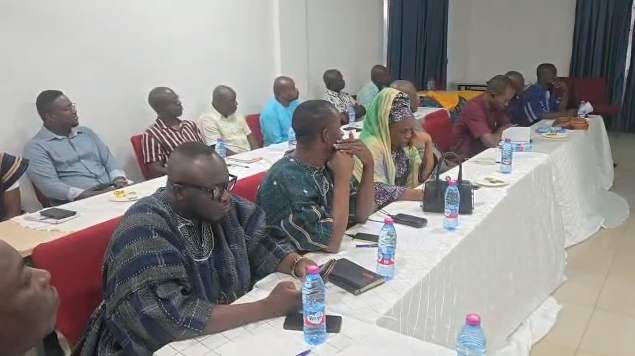
The stakeholder engagement brought together Metropolitan, Municipal and District Chief Executives, coordinating directors, planning officers and other local government officials from across the Upper West Region.