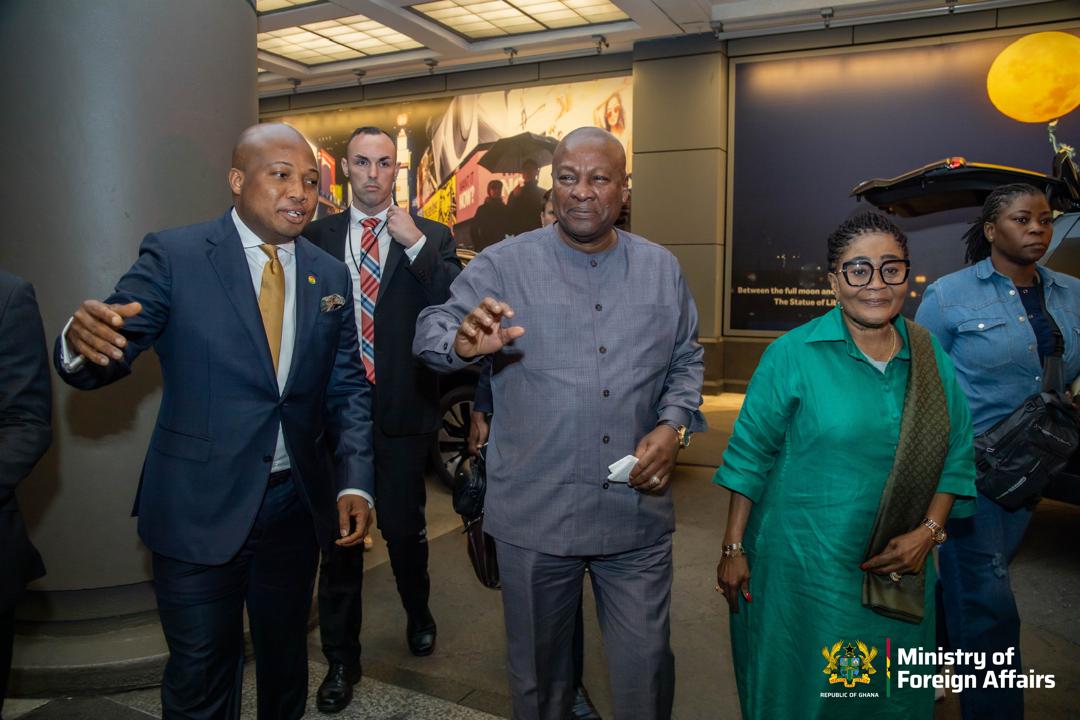
The Embassy of the Republic of Ghana in the United States has issued a strong statement condemning Lincoln University for raising last-minute concerns regarding the scheduled visit of John Dramani Mahama.
President Mahama is expected to visit the university on Thursday, March 26, 2026, where he is slated to receive an honorary doctorate degree. According to the Embassy, the visit had been finalized after weeks of coordination, including a comprehensive walkthrough involving officials from both sides.
However, the situation took an unexpected turn when the university reportedly flagged concerns from a group related to Mahama’s perceived stance on Ghana’s Human Sexual Rights and Family Values Bill and broader LGBTQ+ issues. The Embassy noted that these concerns were not identified during earlier vetting processes prior to the invitation.
In its statement, the Embassy described the development as “both surprising and regrettable,” emphasizing that all logistical and program arrangements had already been completed and that the President had arrived in New York in anticipation of the engagement.
“The timing of these concerns is deeply troubling,” the statement said, pointing out that the issues raised relate to an ongoing legislative process in Ghana rather than the unilateral position of any individual.
The Embassy further stressed that President Mahama accepted the invitation in good faith, recognizing the long-standing relationship between Ghana and Lincoln University. It highlighted the institution’s historic connection to Kwame Nkrumah, Ghana’s first President and a distinguished alumnus.
While acknowledging the university’s right to engage with its stakeholders, the Embassy underscored the importance of mutual respect and careful consideration in handling such matters, particularly given the diplomatic and historical ties involved.
The statement concluded by reaffirming Ghana’s commitment to constructive dialogue and expressing hope that both parties would work toward a balanced and thoughtful resolution.
The incident underscores growing global tensions surrounding LGBTQ+ rights and the complexities institutions face when navigating international partnerships amid evolving social and political debates.