South Africa’s Minister of Science, Technology, and Innovation, Blade Nzimande has urged African leaders to embrace science-driven decision making. According to Nzimande it is essential for the continent to transition from decision-making based solely on “common sense” to adopting evidence-based approaches that are firmly rooted in scientific research. His message underscored that Africa’s future hinges on the continent’s ability to prioritize science within governance, planning, and societal development. Speaking at the 13th World Conference of Science Journalists (WCSJ 2025) in Pretoria, South Africa. This is the first time this significant event has taken place in Africa. Many on the continent view this milestone as a long-awaited opportunity, accompanied by a compelling call to action.
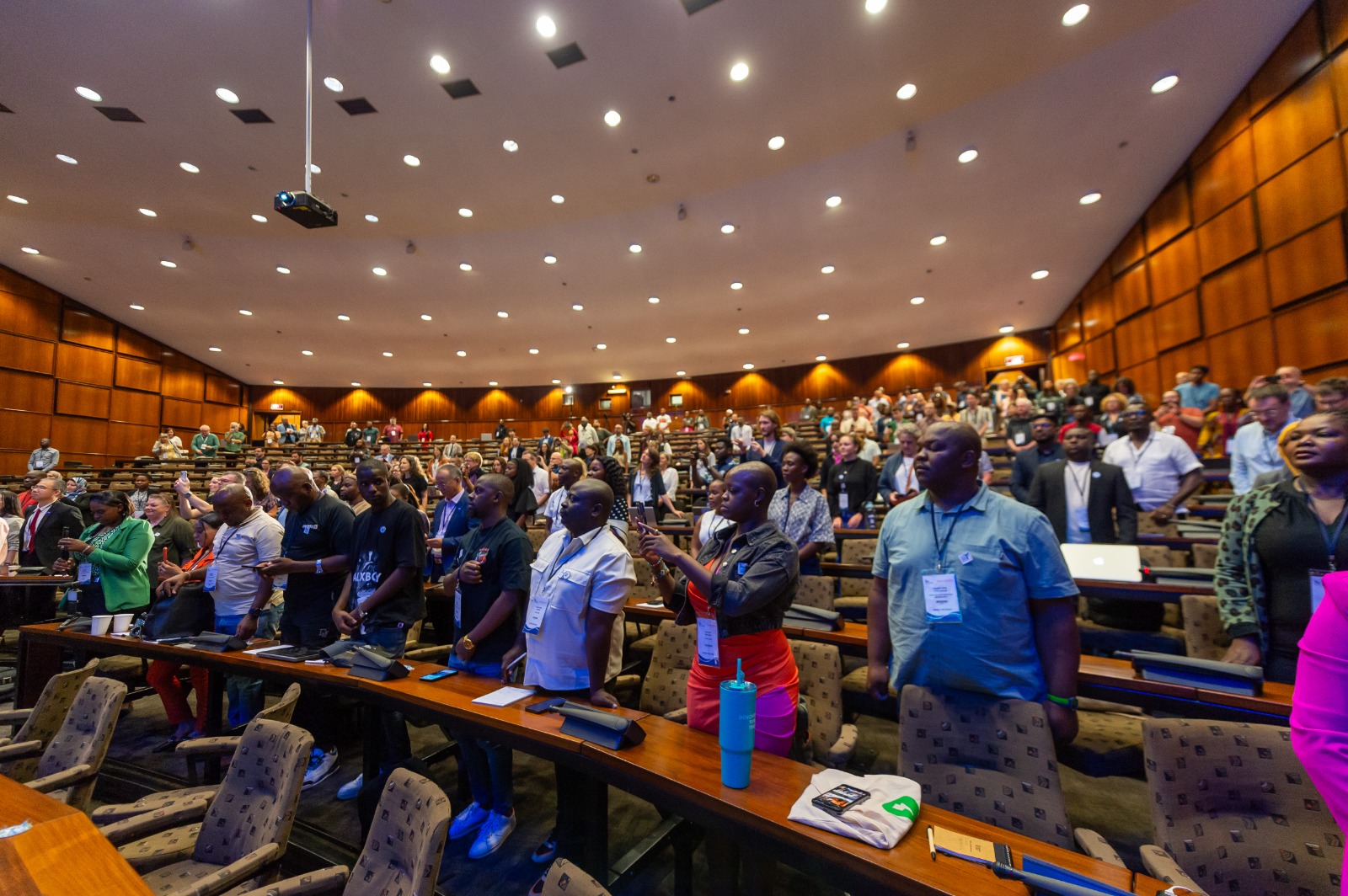
During the conference,
In his address at the launch of the conference, Minister Nzimande cautioned that relying on intuition or political instincts has proven inadequate in addressing pressing challenges, including climate change, public health crises, food insecurity, and economic vulnerabilities that disproportionately impact various communities across the continent.
He articulated the necessity for scientific evidence to inform both public policy and public discourse, urging science journalists to take an active role in this endeavor. “We regard it as our responsibility, policymakers, scientists, and science communicators, to promote the adoption of science-driven decision-making by governments,” he stated. “Your work as journalists is vital, especially during a time when some global leaders are questioning the intrinsic value of science.”
A Global Conference on African Soil
This year’s World Conference of Science Journalists (WCSJ) represents a significant milestone as it is the 13th inaugural edition hosted on African soil. Participants from diverse regions around the globe have gathered in Pretoria, South Africa turning it into a dynamic center for dialogue on the role of science journalism in shaping society.
The conference encompasses 58 panel sessions that engage with critical topics such as systems science, health innovation, environmental resilience, artificial intelligence, emerging technologies, and effective strategies for bridging the gap between researchers and the communities they aspire to serve and 21 field trips.
For African journalists, this event provides a valuable opportunity for collaboration with scientists across the continent, including climate researchers in the Sahel and public health experts in Southern Africa. The central theme, “Science Journalism and Social Justice: Journalism That Fosters Understanding and Resilience,” addresses the pressing challenges many African communities face, particularly the vulnerabilities that can be exacerbated by misinformation, insufficient communication channels, and limited access to reliable scientific insights.

The Power of Storytelling
Dr. Thulani Dlamini, CEO of the Council for Scientific and Industrial Research (CSIR), recently addressed journalists on the importance of effective science communication. He underscored that this process extends beyond the mere transmission of facts; it is fundamentally about fostering public trust.
“Scientific discoveries must be conveyed with truthfulness and responsibility,” he remarked. “Storytelling has been a vital method for humans to share knowledge across generations.”
Dr. Dlamini highlighted that in an era characterized by significant challenges, ranging from climate change and infectious diseases to energy insecurity, societies will increasingly rely on journalists to provide clarity, context, and accurate reporting. He encouraged journalists to approach storytelling as a powerful means of empowerment, rather than simply a method for disseminating information.
Centred on Equity and Community Resilience
Mandi Small home, President of the South African Science Journalists Association, emphasized the need for a renewed commitment to communicating science in ways that uplift and strengthen communities. She pointed out that many people in the Global South still lack access to science journalism that is relatable, accessible, and relevant to their everyday lives.
“Public awareness and understanding of scientific research are essential for building resilient and equitable communities,” she stated. “Science journalists who can explain technology, research, and applied science are vital to promoting social justice.”
Her message resonated strongly with many African reporters in attendance, including those from Ghana, Kenya, Nigeria, and Uganda. These journalists often work in environments where misinformation spreads rapidly, making it challenging for credible scientific voices to be heard.
A Turning Point for African Science Communication
The recent conference underscores that Africa is poised to take a leadership role in global discussions surrounding science, innovation, and equitable development. With its expanding research capabilities and a youthful population eager to explore solutions, many delegates perceive Africa as being at a pivotal moment in its development.
Minister Nzimande emphasized that Africa has transitioned from being a mere consumer of scientific knowledge to becoming a contributor in this field. African scientists are increasingly leading the way in areas such as vaccine development and climate-risk modeling. At this juncture, the continent must cultivate a robust community of science journalists who can effectively communicate this knowledge to the public and ensure that leaders are held accountable for evidence-based governance.
The collective sentiment from journalists, researchers, and policymakers in Pretoria was clear: Africa’s resilience is closely linked to the advancement of science, and the effectiveness of science is dependent on high-quality journalism.
Story by: Noah Nash Hoenyefia, Reporter