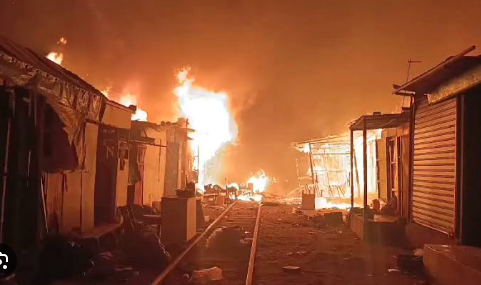
The Service says it recorded 22 fire outbreaks in the first eleven days of November alone.
Speaking on News Tonight on GHOne TV, the GNFS Public Relations Officer, DO I Emmanuel Bonney, attributed the recent spate of fires partly to the effects of El Niño and warned that the situation could worsen as temperatures rise and dry conditions persist.
He assured the public that the Service remains prepared to respond to emergencies but urged households and businesses to take precautionary measures to prevent avoidable fires.
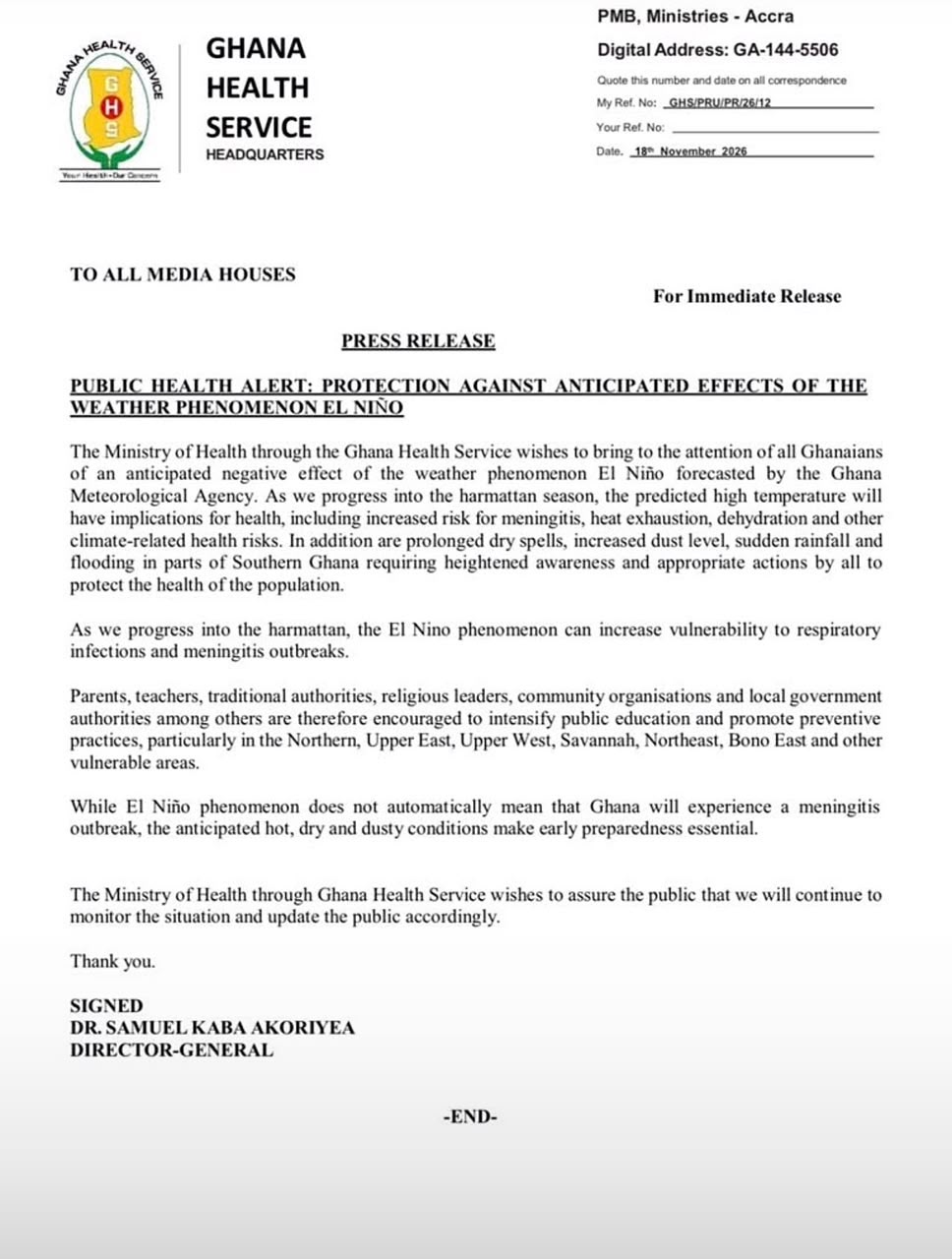
Meanwhile, the Ghana Health Service is warning of increased health risks as the country enters the harmattan season, with anticipated El Niño-related conditions expected to bring higher temperatures, prolonged dry spells and increased dust levels.
The Service says these conditions could heighten the risk of meningitis, respiratory infections, heat exhaustion and dehydration, particularly among vulnerable groups.
The Northern, Upper East, Upper West, Savannah, North East and Bono East Regions have been identified as areas requiring heightened vigilance.
In a public health alert, the Director-General of the Ghana Health Service, Dr Samuel Kaba Akoriyea, clarified that the El Niño phenomenon does not automatically mean Ghana will experience a meningitis outbreak.
He, however, stressed that early preparedness, public awareness and preventive measures are essential to reducing the potential health risks.